
Eagle Hill Institute
The Mission of the Institute
The Institute is a 501(c)(3) scientific and literary nonprofit organization which is dedicated to contributing to a greater interest in scholarly and educational pursuits, especially in the natural history sciences. It maintains an interdisciplinary focus in order to help facilitate a better understanding of complex relationships among disciplines. Its mission is international in scope. In pursuing its mission, the Institute recognizes that greater interests in scholarly and educational pursuits is something from which everyone benefits.
Program Activities
The Eagle Hill Institute is located on the eastern coast of Maine and is perhaps best known for its advanced natural history science summer seminars and fall workshops, the first of which was offered in 1987. It has been hosting the annual Northeast Natural History History Conference since 2011. Its commitments expanded over time to include the publication of a suite of peer-reviewed scientific journals. It maintains a natural history and art history library, hosts occasional resident scholars, and hosts chamber concerts, lecture, and discussion Forums.
The Setting
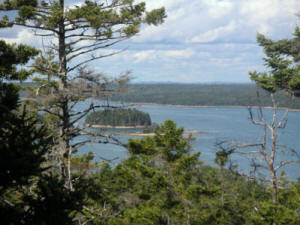
The Eagle Hill Institute is located on the densely forested summit of Eagle Hill, the highest part of Dyer Point, the only peninsula between the Schoodic Point section of Acadia National Park and Petit Manan National Wildlife Refuge. Trails lead from the summit of Eagle Hill to a number of overlooks offering inspirational views of the coast of Maine, with its rocky and evergreen-lined shore and its many islands, bays, and peninsulas. This setting is very conducive to scholarly and educational pursuits.