

The Timing of Nectar Production in Leaves of the Purple Pitcher Plant, Sarracenia purpurea
Natalie C. Pilipczak1 and Thomas E. Miller1,*
1Department of Biological Science, Florida State University, Tallahassee, FL 32306.. *Corresponding author.
Southeastern Naturalist, Volume 24, Issue 4 (2025): 440–448
First published early online: 26 December 2025
Abstract
The insectivorous plant Sarracenia purpurea (Purple Pitcher Plant) produces extrafloral nectar that serves as an attractant for prey. Sugars on the lip of the pitcher-shaped leaf are suspected to influence the capture rate of invertebrate prey for Purple Pitcher Plants. We modified an existing wick-sampling technique to collect samples of nectar from the lips of 99 pitcher leaves of varying ages. We estimated sugar quantity per wick using a colorimetric anthrone assay. Newly opened leaves were significantly more likely to produce nectar and produce more nectar than older leaves. Our data suggest that almost all the nutrient rewards are available and attracting prey during the first 30 days of leaf opening, which is important for the microbial community inside the leaf. As leaves survive on average >260 days, most of the energy within the community is likely recycled over the life of the community. Future studies of micro-ecosystems in pitcher plant leaves need to account for the effect of leaf age on pitcher plant dynamics.
 Download Full-text pdf (Accessible only to subscribers. To subscribe click here.)
Access Journal Content
Open access browsing of table of contents and abstract pages. Full text pdfs available for download for subscribers.
Issue-in-Progress: Vol. 25( 3) ... early view
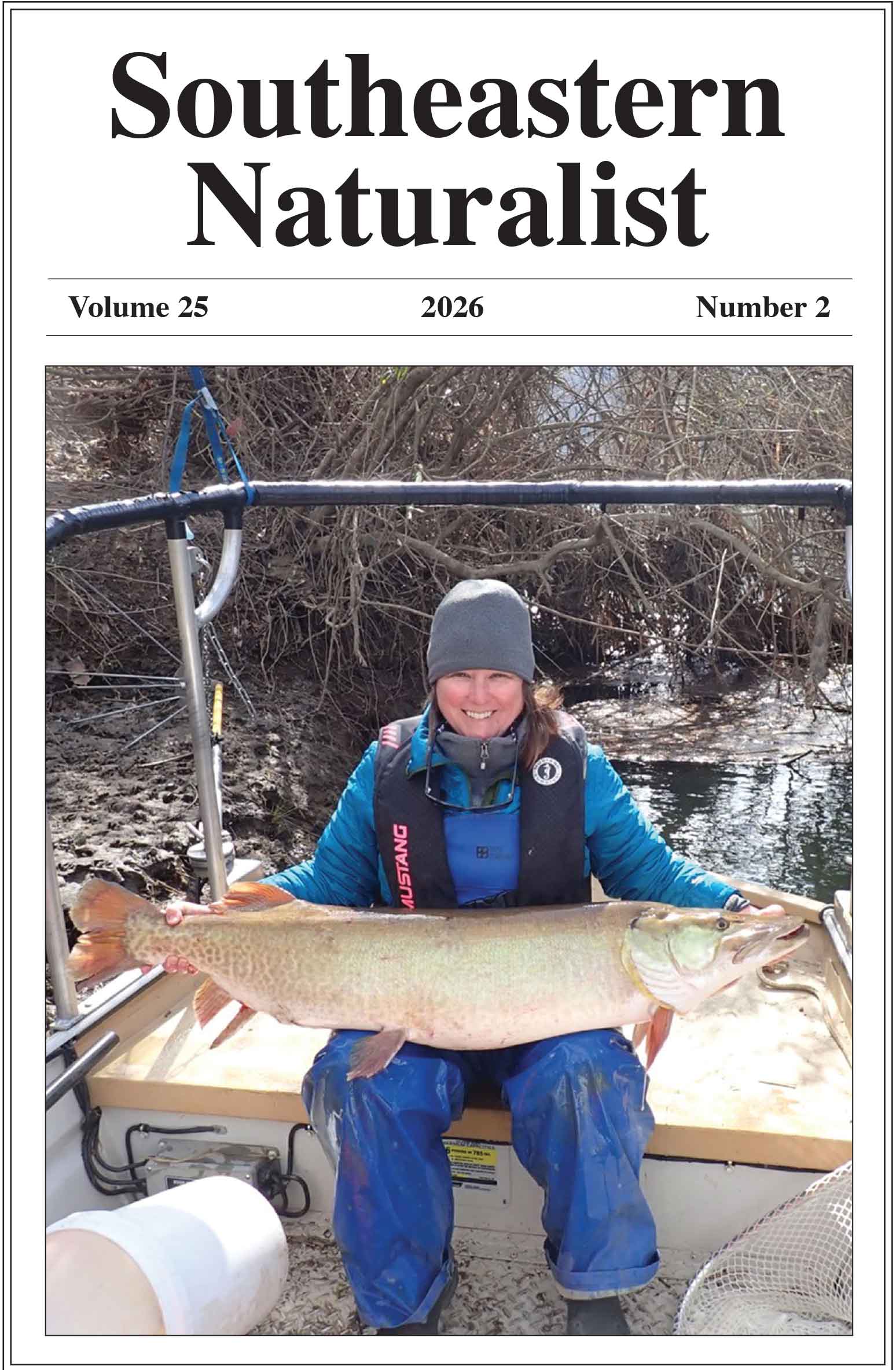
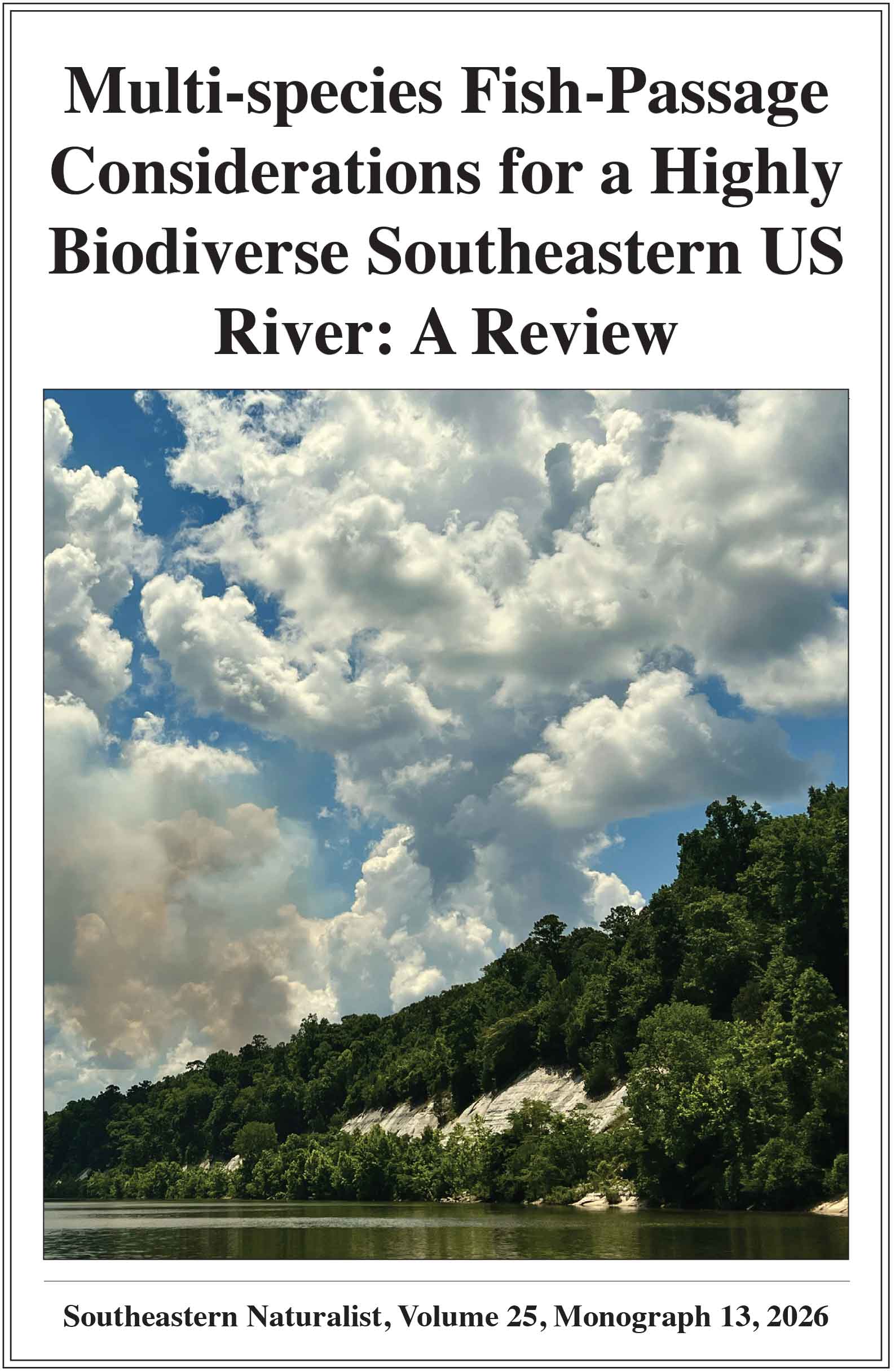
Check out SENA's latest Monograph and current Special Issue in progress:









 The Southeastern Naturalist is a peer-reviewed journal that covers all aspects of natural history within the southeastern United States. We welcome research articles, summary review papers, and observational notes.