

Discovery of the Salamander Mussel (Simpsonaias ambigua) and Spectaclecase (Cumberlandia monodonta) in the Buffalo River, Tennessee
Gerald R. Dinkins1,*, David A. Foltz2,3, and Bernie R. Swiney4
1McClung Museum of Natural History and Culture, University of Tennessee, 1327 Circle Park Drive, Knoxville, TN 37996. 2Edge Engineering and Science, 4270 Ivy Pointe Boulevard., Suite 110, Cincinnati, OH 45245. 3West Virginia University, School of Natural Resources and the Environment, West Virginia University, Morgantown, WV 265063. 4Tennessee Wildlife Resources Agency (retired), 112 Cross Avenue, Dayton, TN 37321. *Corresponding author.
Southeastern Naturalist, Volume 25, Issue 1 (2026): N10-N16
First published early online: 12 March 2026
Abstract
Simpsonaias ambigua (Salamander Mussel) occurs in medium creeks to large rivers and is restricted to waterbodies that support a population of its only known host, Necturus maculosus (Common Mudpuppy). Prior to this study, the only record of the Salamander Mussel in the Tennessee River drainage was from the Duck River. Cumberlandia monodonta (Spectaclecase) is a federally endangered species that in Tennessee was last collected alive in the Duck River in the early 2000s and in the lower Tennessee River in 1998. In 2025, while diving in a deep pool of the lower Buffalo River, Humphreys County, TN, we discovered a robust population of the Salamander Mussel and 1 live Spectaclecase. Future surveys using diving equipment while targeting habitat identified in our study are recommended to assess the status of both species in the Buffalo River and elsewhere.
 Download Full-text pdf (Accessible only to subscribers. To subscribe click here.)
Access Journal Content
Open access browsing of table of contents and abstract pages. Full text pdfs available for download for subscribers.
Issue-in-Progress: Vol. 25( 3) ... early view
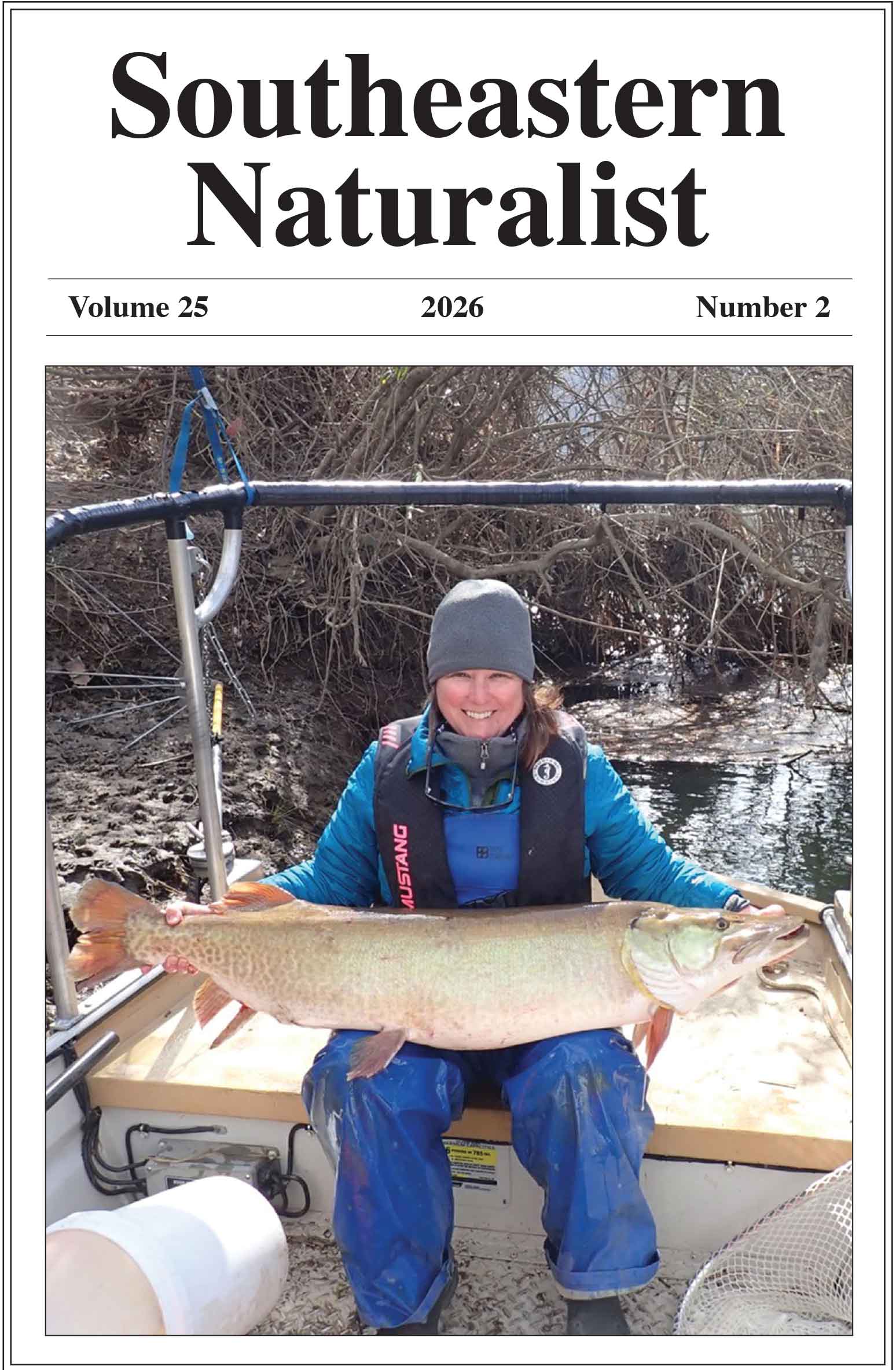
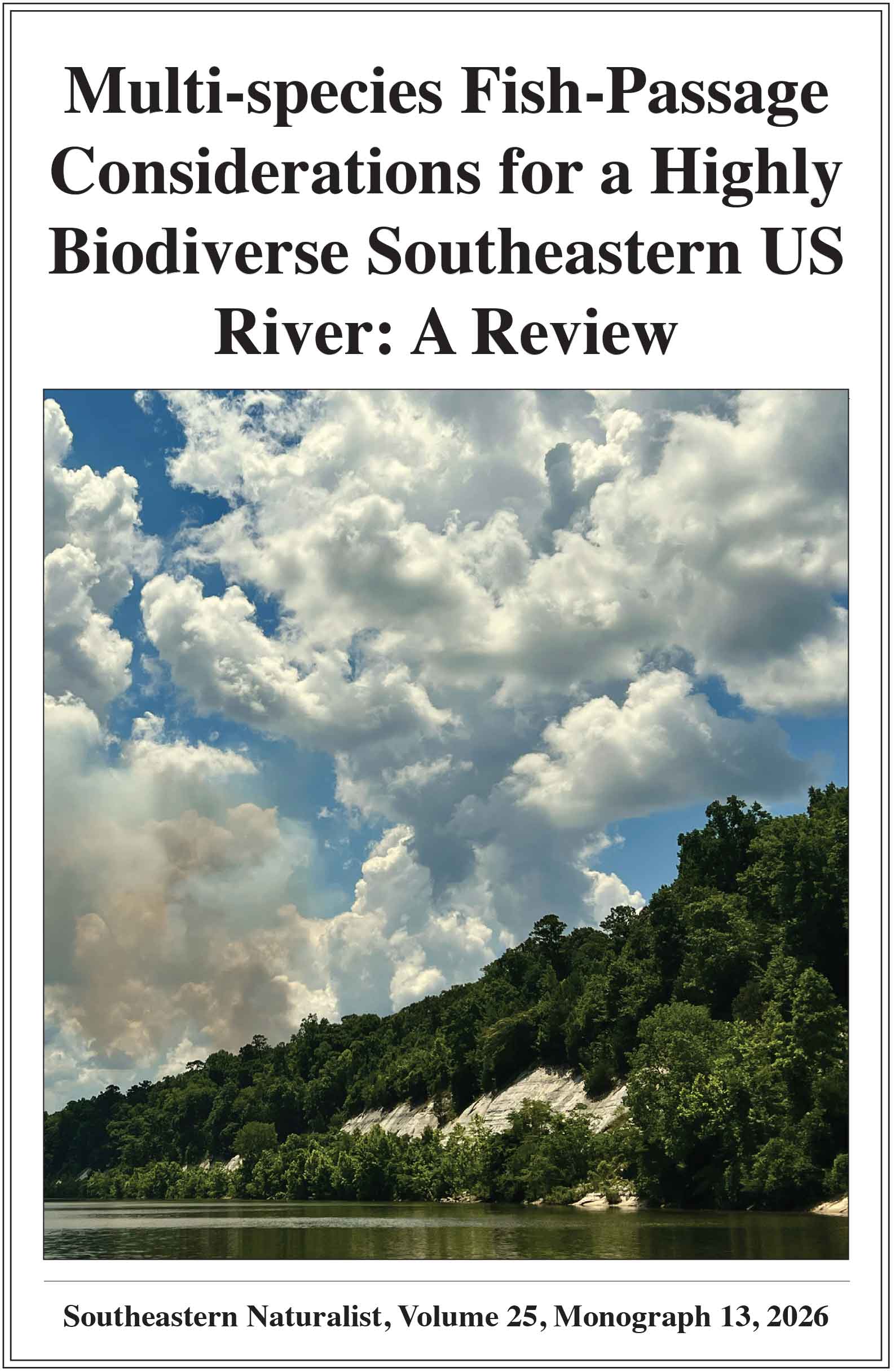
Check out SENA's latest Monograph and current Special Issue in progress:









 The Southeastern Naturalist is a peer-reviewed journal that covers all aspects of natural history within the southeastern United States. We welcome research articles, summary review papers, and observational notes.