

Multi-species Fish-Passage Considerations for a Highly Biodiverse Southeastern US River: A Review
Henry Hershey1,*, Ehlana Stell2,3, Justin Kowalski4, Kalli Parauka4, Chris Smith4, Nathaniel Steffensmeier4, Colby Lee4, David Smith1, Christa Woodley1, Troy Farmer5, Russell Wright4, and Dennis R. DeVries4
1US Army Corps of Engineers, Engineer Research and Development Center, Vicksburg, MS 39180. 2GSI Companies, Honolulu, HI 96813. 3Limnotech, Ann Arbor, MI 48108. 4Auburn University, School of Fisheries, Aquaculture, and Aquatic Sciences, Auburn, AL 36849. 5Clemson University, Clemson, SC 29634. *Corresponding author.
Southeastern Naturalist, Volume 25, Monograph 13 (2026): 1-62
First published early online: 6 April 2026
Abstract
Historically, fish-passage projects in North America have primarily focused on diadromous species of high economic value in river systems with relatively low biodiversity. The southeastern US is one of the most aquatically biodiverse regions in the world, home to dozens of migratory fishes and mussel species that rely on migratory fish hosts for reproduction. Although their imperilment status varies, several species (both fish and mussel) are endangered and in dire need of intervention because of the impediment to migration by dams. In the face of such diversity, fish-passage structures (e.g., fishways, fish ladders, bypass channels around dams, etc.) must be designed to accommodate as many species as possible to support and sustain biodiversity in fragmented systems. Knowledge of the swimming capabilities, passage requirements, and migratory behavior of fishes is essential to the effective design of engineered passage solutions. Therefore, we have assembled a review of the swimming performance and potential passage requirements of 19 fish species targeted for passage at proposed dam bypass channels in the Alabama River. Given the threat of invasive species range expansion, we also include 5 exotic carps in our review. In addition, we have included 3 species not initially selected in the feasibility study on the Alabama River, but important in the system and region. Although some species were well studied, we found significant knowledge gaps that could be problematic for passage design. Given these gaps, we offer a roadmap for multi-species fish-passage research in the region. We believe the roadmap and, albeit limited, data assembled in this review will be of high utility to managers of these and similar species in fragmented river systems throughout the southeastern US.
 Download Full-text pdf (Accessible only to subscribers. To subscribe click here.)
Access Journal Content
Open access browsing of table of contents and abstract pages. Full text pdfs available for download for subscribers.
Issue-in-Progress: Vol. 25(4) ... early view
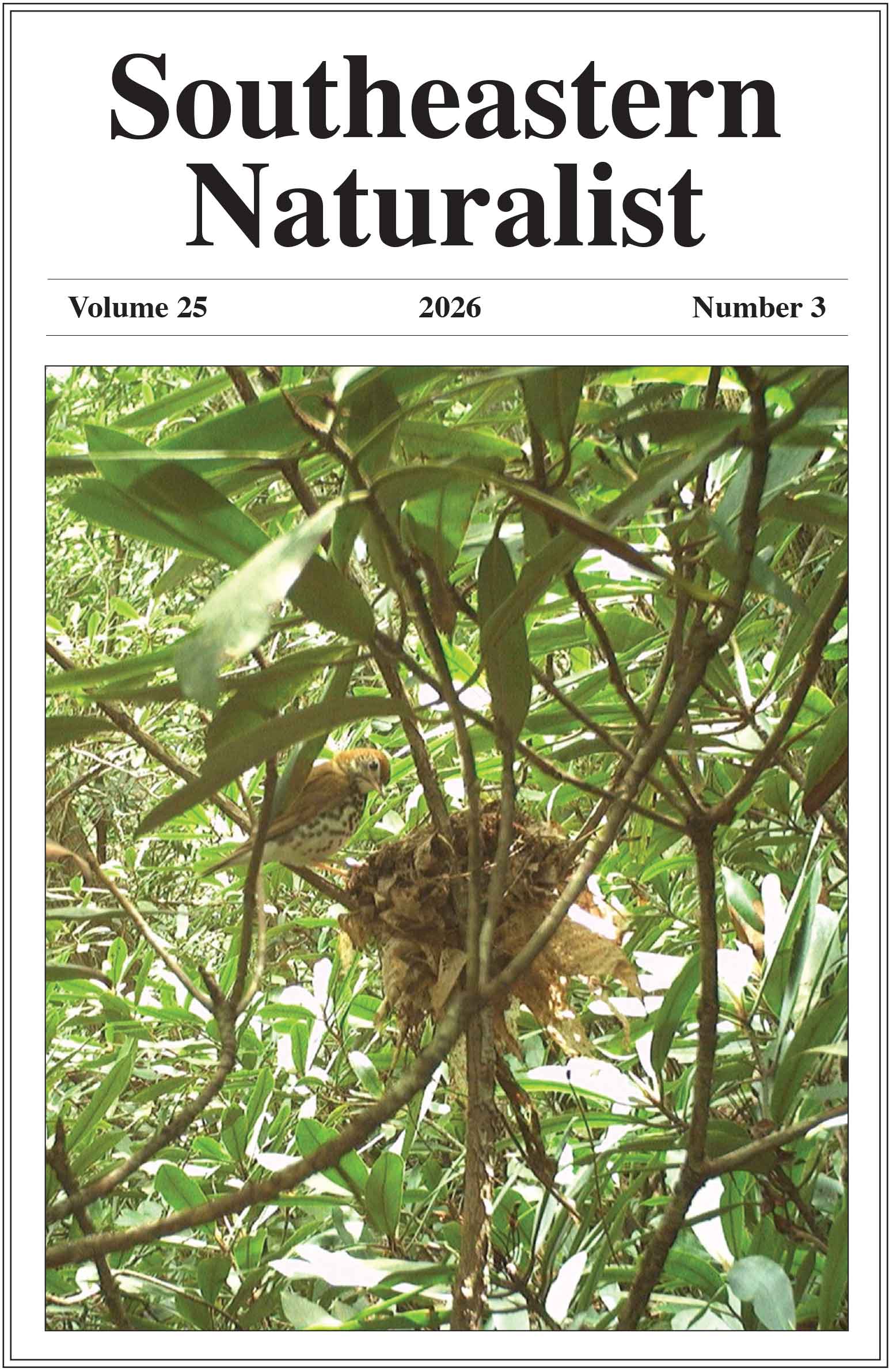
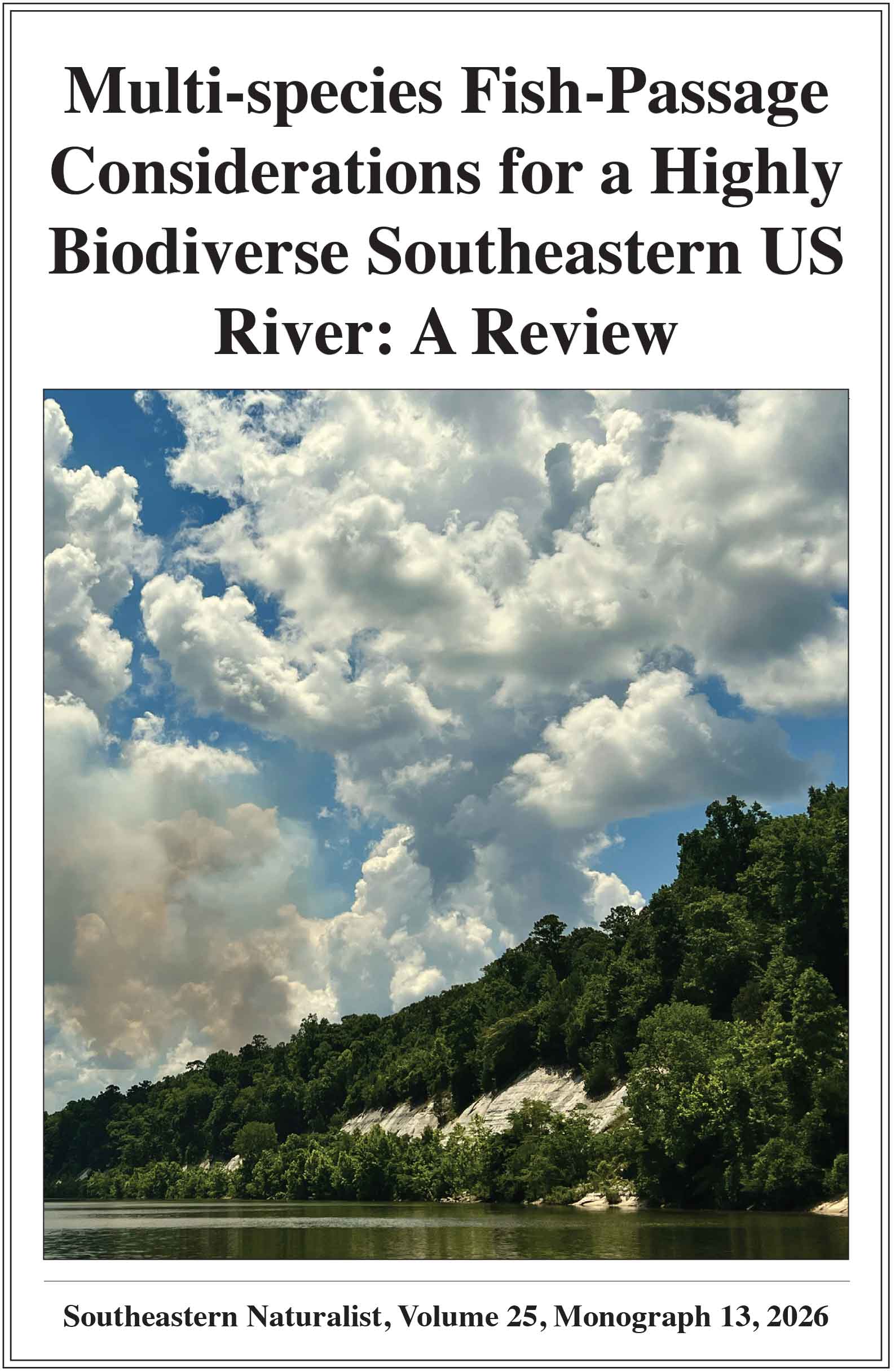
Check out SENA's latest Monograph and current Special Issue in progress:









 The Southeastern Naturalist is a peer-reviewed journal that covers all aspects of natural history within the southeastern United States. We welcome research articles, summary review papers, and observational notes.