

Quantifying Potential Fruit Production by Three Common Clonal Shrub Genera in Eastern Hardwood Forests
Cathryn H. Greenberg1,* and Douglas J. Levey2
1USDA Forest Service, Southern Research Station, Upland Hardwood Ecology and Management Research Work Unit, Asheville, NC 28806. 2107 Westbury Road, McLean VA 22101. *Corresponding author.
Southeastern Naturalist, Volume 25, Issue 3 (2026): 341–354
First published early online: 12 August 2026
Abstract
Fruit crop-size estimates are little better than indices unless tied to plant abundance. We developed a “standardized fruit crop” (SFC) using 11 years of fruit-density data in replicated transects to estimate long-term average (versus within-year) production by Vaccinium spp. (blueberry), Gaylussacia spp. (huckleberry), and Rubus spp. (blackberry) if applied to shrub-area inventories. We sampled blueberry and huckleberry in mature forest where canopy cover and shrub area were constant, and blackberry—a “pioneer” shrub—in shelterwood harvests where light availability decreased with stand development. Annual average (±SE) blueberry SFC (fruits/m2 shrub area) varied from 1.3 ± 0.9 to 18.8 ± 15.8; long-term (11-yr average) SFC (95% CIs) was 6.8 ± 1.8 (3.2–10.3). Annual average huckleberry SFC varied from 1.8 ± 1.3 to 19.8 ± 10.8; long-term average SFC was 11.6 ± 1.8 (8.0–15.3). In shelterwoods, blackberry shrub area and (disproportionately) SFC increased, peaked 3–6 years post-harvest, then declined with canopy closure. When only peak years were included, average blackberry SFC was 90.3 ± 11.3 (67.7–113.0) and is a more reliable estimate for high-light environments. Our SFCs cannot reliably predict crop sizes within any given year or area but provide a forest planning tool to estimate average (over the long-term) or potential fruit production that can be tailored to specific stands and landscapes by application to shrub-area inventories.
 Download Full-text pdf (Accessible only to subscribers. To subscribe click here.)
Access Journal Content
Open access browsing of table of contents and abstract pages. Full text pdfs available for download for subscribers.
Issue-in-Progress: Vol. 25( 3) ... early view
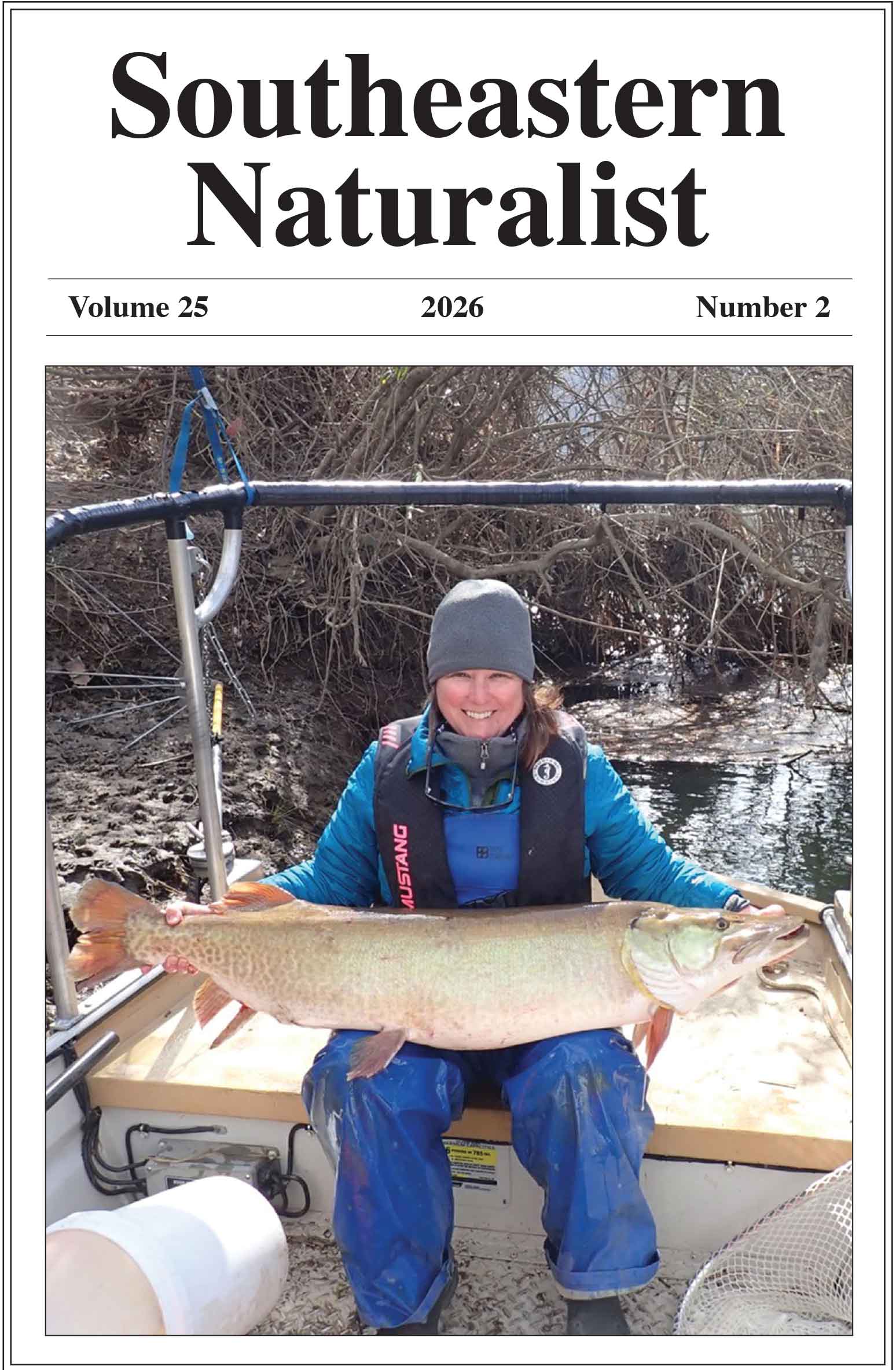
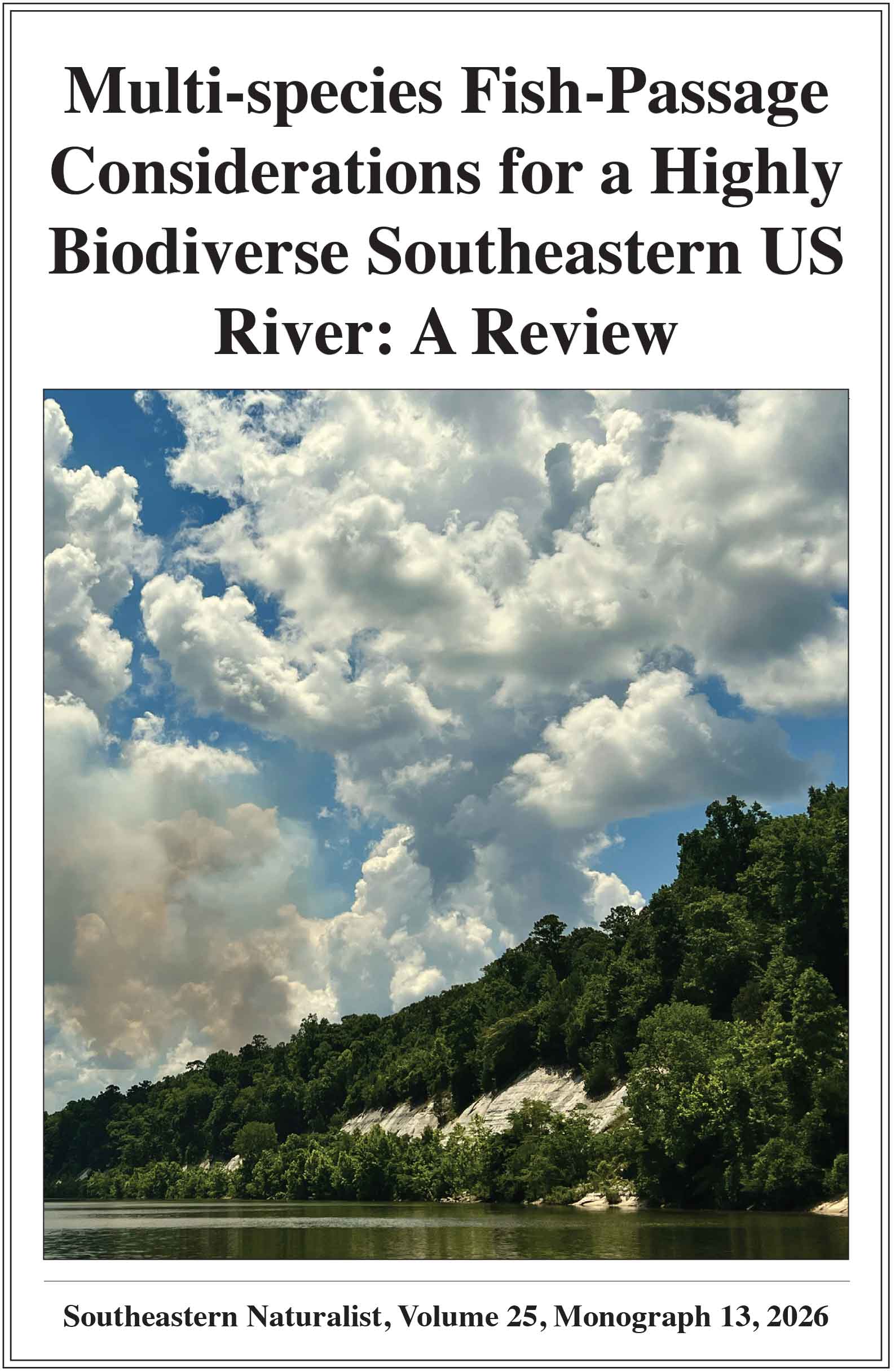
Check out SENA's latest Monograph and current Special Issue in progress:









 The Southeastern Naturalist is a peer-reviewed journal that covers all aspects of natural history within the southeastern United States. We welcome research articles, summary review papers, and observational notes.